About the Sufis
The Abode was founded in 1975 by Pir Vilayat Inayat Khan, then head of the Sufi Order (now known as the Inayatiyya), as a living experiment a community devoted to embodying the “Message” of his father, Hazrat Inayat Khan, the first Sufi teacher to bring the teachings of universal Sufism to the West. The vision was simple yet profound: to create a place where spiritual ideals could take root in daily life, where people could live, work, and grow together in the spirit of love, harmony, and beauty.
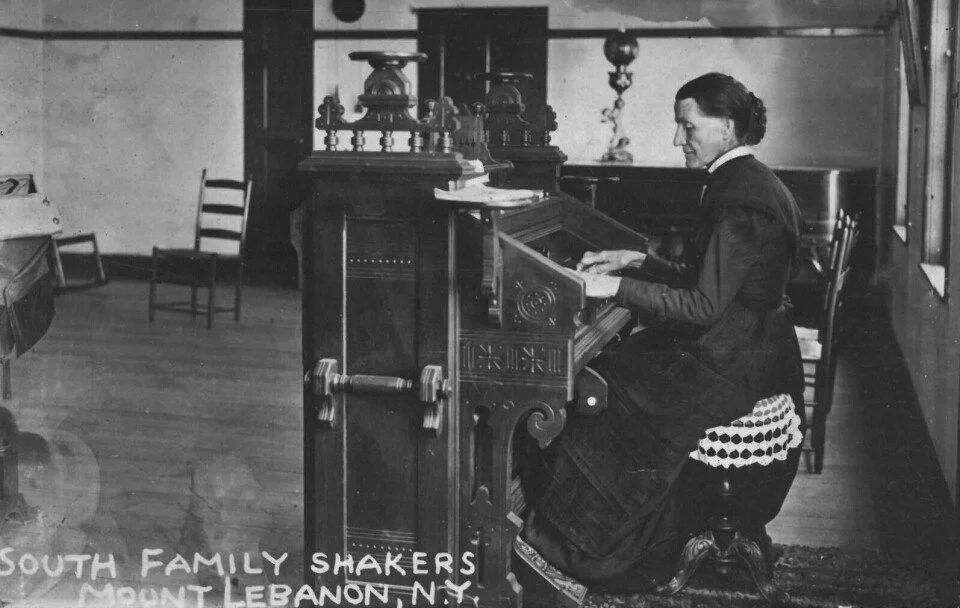
Long before the Sufis arrived, this land held many other stories. For centuries, it was cared for by the region’s first inhabitants, Native Americans, whose sacred sites still whisper their presence in the surrounding hills and streams. In the 19th century, the Shakers cultivated these same fields, building simple, enduring structures that reflected their devotion to community, craftsmanship, and faith. Later, the land became home to a youth summer camp, another chapter of joyful gathering and shared purpose before becoming the home of the Abode community.
Set on 350 acres of rolling meadows, forested hills, and historic Shaker buildings, the Abode continues to serve as a sanctuary for spiritual exploration and community life in harmony with nature. Its mission has always been to offer a refuge for seekers of all traditions a place where inner and outer life meet, and where the sacred can be experienced in the everyday.
In its early years, the Abode thrived as a vibrant intentional community. By 1985, it was home to around 60 adults and 25 children, sustaining itself through creativity and shared labor. The residents operated a bakery, a Volkswagen repair shop, a children’s school (the Mountain Road School), and an organic farm that nourished both body and spirit. The hum of daily life from meditation bells in the morning to laughter echoing through the old Shaker barns was infused with purpose and prayer.
Today, the Abode lives on as a retreat and spiritual center with a smaller but deeply dedicated residential community. Each year, it welcomes teachers, groups, and guests from many spiritual paths, hosting workshops, retreats, and gatherings that celebrate unity, dialogue, and the sacredness of life. The land remains a place of peace and pilgrimage a living bridge between the wisdom of the past and the unfolding spirit of the present.


Explore our photo gallery to journey through time, from the Abode’s earliest days in 1975 to the present
Learn about the Abode Gardens, the caretakers and the history.
Learn about the Abode Farm and It’s history, and sign up for it’s CSA!

About the Shakers
The Shakers, formed in Manchester, England in 1747. They were a small Protestant group that branched off from the Society of Friends (the Quakers). People called them the Shakers because of the singing and ecstatic dancing in their worship.
They were soon joined by a young woman of great faith, Ann Lee. The Believers saw her as extraordinarily touched by God and gave her the title Mother Ann. Under her guidance they came to believe that God holds both a male and a female nature, so men and women should stand as equals. Criticized and persecuted in England, Mother Ann was inspired to bring the Shakers to America. They arrived in New York in 1774 and settled at Watervliet, near Albany.
The Shakers lived their ideals more fully than almost anyone of their time. Women and men shared leadership equally: every community was guided by both Elders and Eldresses, generations before women could vote. People of all races were welcome as full members. The Shakers held all property in common, cared for orphans, the elderly and anyone in need, and refused to take up arms, even during the Civil War. In a young country built on private ambition, they built something different: communities where everyone worked, everyone was provided for, and no one stood above anyone else.
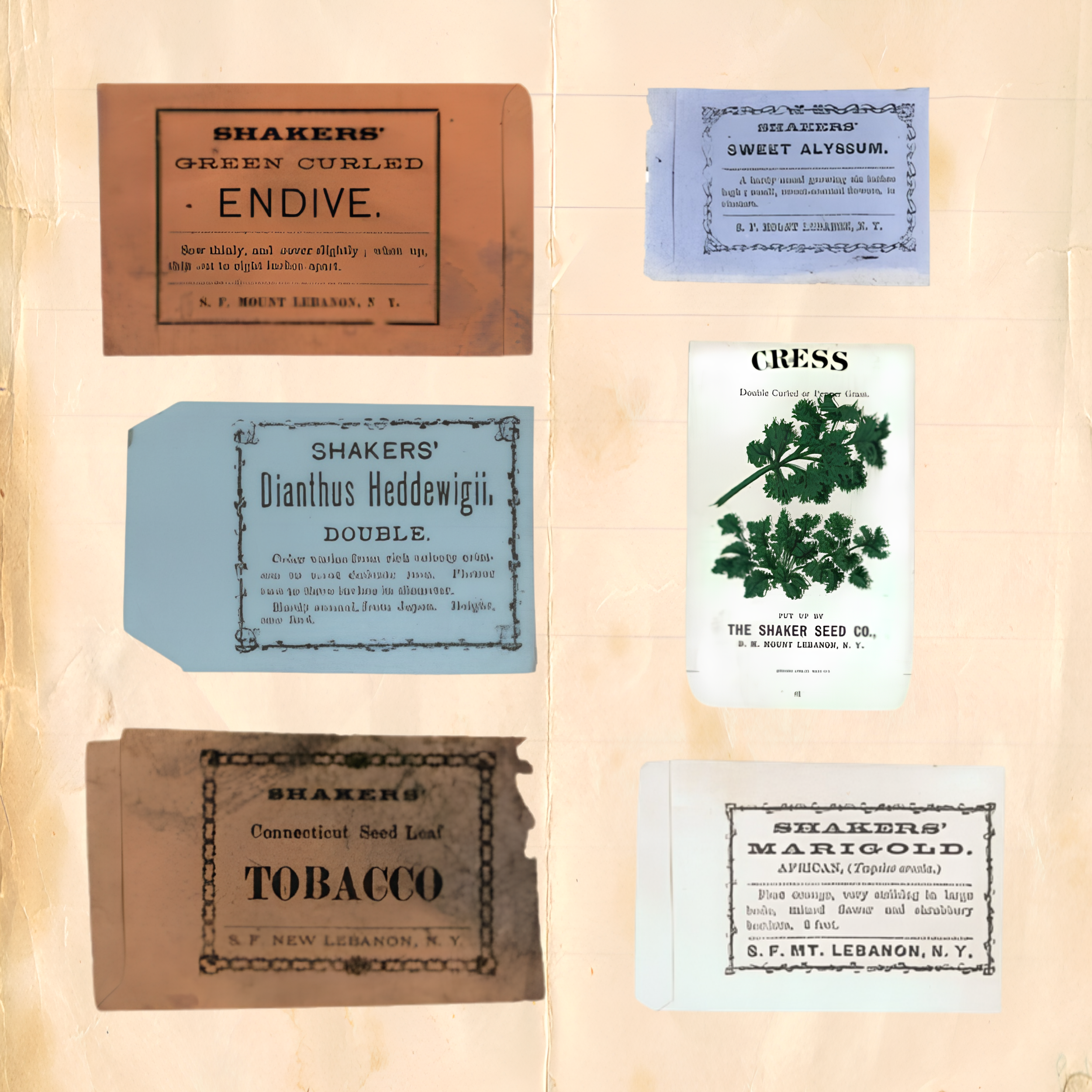
The Shakers also had a deep relationship with the land. They saw farming and building as acts of worship, and they cared for their fields, orchards and woodlands with the patience of people who expected to be there for generations. They were among the first to sell garden seeds in paper packets, and they grew and processed medicinal herbs on a large scale, much of it here at Mount Lebanon. Their barns, mills and water systems were models of ingenuity. Everything they made, from a chair to a hillside of farmland, was meant to be useful, lasting and beautiful.
After the American Revolution the Shakers grew quickly. They spread to communities across New York and New England and eventually reached as far west as Indiana and Kentucky, and they numbered around 6,000 at their peak in the mid-19th century. To the Shakers, careful work was itself a form of devotion: “hands to work, hearts to God.” Their influence on American design, architecture, medicine and ways of living is still felt today.
Mount Lebanon
Founded in 1787, Mount Lebanon was the first formally organized Shaker community and became the spiritual and administrative center for Shakers across the country. At its height the village covered more than 6,000 acres, with about 600 Shakers living and working in hundreds of buildings. Members lived in “Families,” each a cluster of dwellings, shops and barns spread along the valley. Mount Lebanon was declared a National Historic Landmark in 1965.
The South Family
The Abode sits on the grounds of the South Family, which began in 1787 and took its name from its place at the southern end of the village. Most of the buildings on our campus were built by the South Family in the mid-1800s as homes and workshops.
The South Family is best known for its chairs. In 1872, under Brother Robert Wagan, the family built a large chair factory. Its ladder-back chairs, sold by number and marked with a trademark, became one of the best-known Shaker products in America. Buyers came to a showroom on the property, and the family made chairs well into the 20th century. The last member of the South Family, Sister Sarah Collins, was among its most famous chair makers.
After the Shakers left Mount Lebanon, the South Family became home to the Shaker Village Work Camp in 1947, a summer program for young people. In 1975 Pir Vilayat Inayat Khan and a community of spiritual seekers bought the property and restored the Shaker buildings as the Abode of the Message. Today we carry the site forward through “preservation through use.” The buildings the Shakers built for work and worship are still lived in and cared for, and they remain open to visitors.
Learn about the Chatham, NY, Shaker Museum and it’s events
Learn more about Sabbathday Lake, the only living Shaker community left, in Maine.
Learn more about the Shaker Museum and it’s events in Enfield, NH.